



Course Duration: 5 years
Eligibility: M.Sc in Mathematics
Intake: 10
Research Methodology (MT-PHD-01)
Credit -4/100 Marks Duration: 4 Hrs/ Week
UNIT – I: Foundations of Research
Meaning and Objective of Research, Types of Research, Data Sources: Primary and Secondary, Data Collection, Generation, Arrangement, and Processing
UNIT-II: Basic Computer Applications
Basic computer knowledge, Features and applications related to presentation of text in suitable format and saving the data for future applications. Use of word processing, Practical knowledge of MS Word to type the script, insert tables, figures and graphs, plotting of graphs in excel, Preparation of power point presentations based on the topic of research. Insertion of figures, graphs, charts in presentation. Use of spreadsheet and database software, Preparation of scientific posters for presentations, Internet and its application: Email, WWW, Web browsing, acquiring technical skills, drawing Inferences from data, Cloud computing. Introduction to LaTeX programming for scientific writing, document structuring, mathematical typesetting, insertion of images, tables, references and preparation of research articles, theses and presentations using Beamer.
UNIT-III: Quantitative methods, Statistics and application of Computer in statistics
Measures of Central tendency and Dispersion. Probability distribution- Normal, Binomial and Poisson distribution. Parametric and non-parametric statistics. Confidence interval, Errors. Quantitative Techniques: Levels of significance, Regression and Correlation coefficient. Statistical analysis and fitting of data; Chi‐Square Test, Association of Attributes t‐Test ANOVA Standard deviation, Co‐efficient of variations. Open-source software for quantitative and statistical analysis.
UNIT-IV: Documentation and scientific writing:
Results and Conclusions, Preparation of manuscript for Publication of Research paper, Presenting a paper in scientific seminar, Thesis writing. Structure and Components of Research Report, Types of Report: research papers, thesis, Research proposal, Research Project Reports, Pictures and Graphs, citation styles, writing a review of paper, Bibliography.
Research and Publication Ethics (MT-PHD-02)
Credits-2/100 Marks Duration: 2 Hrs/ Week
UNIT-I: Philosophy, Ethics, and Scientific Conduct
1. Introduction to Philosophy: Definition, nature, and scope; concept, branches.
2. Ethics: Definition, moral philosophy, nature of moral judgments and reactions. Ethics with respect to science and research; intellectual honesty and research integrity.
3. Scientific Misconduct: Falsification, fabrication, and plagiarism (FFP).
4. Redundant Publications: Duplicate and overlapping publications, salami slicing. Selective reporting and misrepresentation of data.
UNIT-II: Publication Ethics
Publication Ethics: Definition, introduction, and importance. Violation of publication ethics, authorship, and contributor ship.
2. Basic Practices and Standards: Setting initiatives and guidelines (COPE, WAME, etc.), conflict of interest.
3. Publication Misconduct: Definition, concept, problems leading to unethical behaviour, identification of publication misconduct, complaints and appeals.
4. Predatory Publishers and Journals.
Practice
1. Open Access Publishing:
A. Publications and initiatives; SHERPA/RoMEO for copyright policies; tools to identify predatory publications (e.g., SPPU software);
B. Journal suggestion tools (JANE, Elsevier Journal Finder, Springer Suggester).
2. Publication Misconduct:
A. Group discussion: Subject-specific ethical issues, FFP, authorship, conflict of interest, complaints and appeals; examples and fraud cases (India and abroad).
B. Software tools: Use of plagiarism checkers (Turnitin, Unkind, etc.).
3. Database and Research Metrics:
A. Databases: Indexing databases, citation databases (Web of Science, Scopus, etc.).
B. Research Metrics: Journal impact factor (JCR), SNIP, SJR, IPP, Cite Score, h-index, g-index, i10 index, altimetric.
Major Paper
Bicomplex Numbers (MT-PHD-03)
Credit-4/100 Marks Duration: 4 Hrs/ Week
UNIT I – Foundations of Complex and Multicomplex Numbers (Compact Overview): Concise revision of classical complex numbers, covering basic algebra, geometry, analytic functions, and Cauchy–Riemann equations. It then introduces multicomplex systems, explaining how Bicomplex numbers arise as a natural extension of the complex field.
UNIT II – Algebraic & Topological Structure of Bicomplex Space: Introducing the idempotent basis and the decomposition of BI complex numbers into two auxiliary complex components. It discusses zero divisors, the null cone, conjugations, and BI complex modulus, and then introduces the induced topology of BI complex space, including open and closed discus regions.
UNIT III – Bicomplex Holomorphic Functions and Analytic Theory: The theory of Bicomplex differentiability and holomorphy. Students learn BI complex Cauchy–Riemann equations, the structure of Bicomplex regular functions, and the formulation of power series in idempotent form. Emphasis is placed on convergence behaviour, analytic regions, BI complex entire functions, and the relationship between bicomplex holomorphy and two classical holomorphic functions.
UNIT IV – Bicomplex Functional Analysis: Spaces and Operators: Introduces Bicomplex normed, Banach and Hilbert spaces, with special attention to hyperbolic-valued norms and bicomplex inner products. It covers the bicomplex Schwarz inequality, orthogonality, projections, and the Riesz representation theorem. The theory of bicomplex linear and bounded operators is developed, including spectrum, eigenvalues, and dual spaces. This forms the analytical foundation for advanced Bicomplex research.
UNIT V – Bicomplex Sequence Spaces and Generalized Convergence: Sequence spaces defined over Bicomplex numbers, including Bicomplex versions of classical spaces such as ∫p, C, and C,C₀
Students study entire Bicomplex sequences, Kothe–Toeplitz duals, and the sixteen dual structures emerging from idempotent decomposition. It also introduces advanced convergence concepts such as bicomplex statistical convergence, λ-statistical convergence, I-convergence, and deferred statistical convergence.
Minor/Elective Sequence Spaces, Summability Theory & Statistical Convergence (MT-PHD-04)
Credits: 4/100 Marks, Duration: 4 Hrs/ Week
UNIT I – Basics of Sequences and Classical Convergence: Introduces sequences, subsequences, boundedness, monotonicity, and ordinary limits. It revisits essential theorems such as Bolzano–Weierstrass and Monotone Convergence, forming the analytical foundation needed for modern convergence concepts.
UNIT II – Statistical Convergence: Definitions and Core Ideas: Natural density and the notion of statistical convergence, explaining how it generalizes ordinary convergence. Statistical Cauchy sequences, regularity and examples highlighting the difference between statistical and classical convergence are developed.
UNIT III – Statistical Limit Points and Completeness Properties: Studies statistical limit points and cluster points, exploring their relationship with ordinary limits. It includes statistical analogues of classical completeness theorems and describes how non-thin subsequences determine statistical behaviour.
UNIT IV – Statistical Monotonicity, Boundedness and Behaviour: Examines statistically monotone and statistically bounded sequences, showing how monotonicity “almost everywhere” shapes convergence. It includes characterizations, decomposition results, and counterexamples important for understanding non-classical behaviour.
UNIT V – Sequence Spaces and Summability Methods: Introduces classical and generalized sequence spaces such as C,C₀ and l∞ along with summability methods like Cesàro and matrix transformations. Students study dual spaces and how statistical convergence fits into summability theory.
|
Sl. No. |
Course Titel | Course Code | Marks | Credit |
| 1. | Research Methodology | MT-PHD-01 | 100 | 4 |
| 2. | Research & Publication Ethics | MT-PHD-02 | 100 | 2 |
| 3. | Bicomplex Numbers (Major) | MT-PHD-03 | 100 | 4 |
| 4. | Sequence Spaces, Summability Theory & Statistical Convergence (Elective) | MT-PHD-04 | 100 | 4 |
| 5. | Seminar | MT-PHD-05 | 100 | 2 |
| Total: | 500 | 16 | ||
Seminar/Workshop Details:
Seminar (MT-PHD-05)
Credit-2/100 marks
1. Review and critics of Published works:
50 Marks Prepare a comprehensive review, summarize key results, highlight strengths and limitations and provide critical analysis in proper academic format.
2. Power Point Presentation of Review Work
50 Marks Prepare and present a seminar using slides, demonstrating clarity, organization, understanding of the topic and ability to answer questions related to the reviewed material.
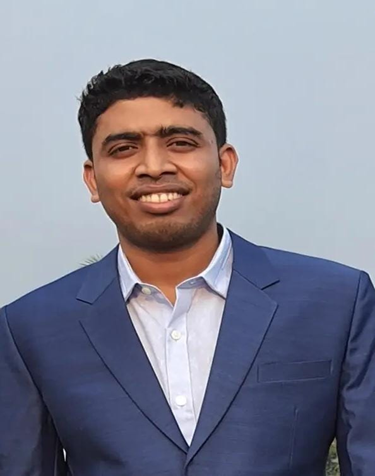
It is my privilege to welcome you to the Department of Mathematics, where learning goes beyond classrooms and equations to inspire innovation and critical thinking. Our department is committed to providing a dynamic academic environment that blends the elegance of pure mathematics with the power of computational and applied techniques. The curriculum is thoughtfully designed to equip students with a deep understanding of mathematical theories while fostering skills in problem-solving, programming, data analysis, and research methodologies. We believe that education is not just about acquiring knowledge, but also about cultivating a mindset of curiosity, perseverance and ethical responsibility. Our faculty members are dedicated mentors, guiding students through seminars, workshops, internships, and collaborative research projects that connect classroom concepts to real-world applications. With special emphasis on areas like graph theory, fuzzy logic, optimization, and computational tools such as MATLAB, Python and C programming, our graduates are well-prepared to excel in academia, industry, and research. We take pride in nurturing talent that contributes meaningfully to society, whether through innovative research, teaching, or professional practice. I warmly invite you to be part of our department’s vibrant academic community, where together we can explore, discover and shape the future through the limitless possibilities of mathematics.
Warm regards,
Assistant Professor, Head of the Department
Department of Mathematics
Dhamma Dipa International Buddhist University
About the Program: Our Postgraduate Program in Mathematics helps students learn advanced topics in pure and applied mathematics. It also teaches how to use mathematics in solving real-life problems through modeling, computation and research. The course builds skills in logical thinking, problem-solving and creativity, preparing students for higher studies and professional careers.
Future Scope: After completing this program, students can join a Ph.D. in their chosen field of mathematics and work on new ideas that add to the subject’s growth. After a Ph.D., they can also do post-doctoral research in top universities in India or abroad, where they can work with experts and publish their work. Postgraduates can build careers in teaching, research, data science, finance, actuarial science and many other fields that need strong mathematical skills.
Research and Collaboration: Our department supports a strong research culture. Students take part in seminars, workshops and projects that often connect mathematics with other subjects. Teachers work with universities and research centers around the world, giving students chances to learn from global experts, apply for fellowships and attend international conferences.
Programme Educational Objectives:
PEO-1: To develop a strong foundation in advanced mathematical theories, methods, and applications, enabling graduates to excel in academic, research and professional environments.
PEO-2: To cultivate analytical thinking, problem-solving skills and research capabilities for addressing complex challenges in mathematics and its interdisciplinary applications.
PEO-3: To prepare graduates for successful careers in academia, industry and research, and to encourage them to pursue higher studies such as Ph.D and post-doctoral programs at national and international levels.
Program Outcomes:
Here are some Program Outcomes based on the syllabus you provided, which focuses on Graph Theory, Algorithms, and Applications, including practical components like MATLAB, C programming, and fuzzy logic:
Program Specific Outcomes :
PSO 1 – Mathematical Modelling and Analysis : Graduates will be able to design, model, and analyse complex real-world problems using advanced mathematical theories such as graph theory, metric spaces, differential equations, and optimization techniques, integrating analytical and computational approaches.
PSO 2 – Computational and Algorithmic Implementation : Graduates will be proficient in developing and implementing efficient algorithms using MATLAB, C, Python and other computational tools to solve mathematical, engineering, and data-driven problems involving networks, numerical analysis and symbolic computation.
PSO 3 – Intelligent Decision-Making and Applications : Graduates will apply fuzzy logic, finite automata and algorithmic strategies to create intelligent systems for decision-making, uncertainty modeling, and optimization in computer science, engineering and interdisciplinary domains.
Program Highlights
Placement & Internship Info:
Industry Collaboration – Strong linkage with IT companies, research organizations and public sector units for student placement and internships.
Career Opportunities – Graduates are placed in sectors such as software development, data analytics, research and development, banking & finance, education and government services.
Internship Support – Dedicated guidance for securing internships in reputed organizations, including industry-based projects and academic research internships.
Higher Studies Pathways – Students are encouraged and guided to pursue Ph.D. and post-doctoral research opportunities in India and abroad.
Skill Development Programs – Regular workshops, coding bootcamps and research methodology training to enhance employability and career readiness.
Career Prospects:
Graduates of this program have diverse opportunities in academia, research, industry, and government sectors. They can work as:
Data Analysts, Data Scientists and Machine Learning Engineers in IT and analytics firms.
Software Developers and Algorithm Designers in software companies and tech startups.
Mathematical Modellers and Operations Researchers in manufacturing, logistics and supply chain industries.
Research Scientists in government organizations such as ISRO, DRDO, CSIR and research labs.
Educators and Faculty Members in schools, colleges and universities.
Financial Analysts and Risk Managers in banks, insurance companies, and financial institutions.
Competitive Examination Candidates for UPSC, NET, GATE and other national or state-level exams.
|
Sl. No. |
Course Category |
Course Code |
Course Title |
L |
T |
P |
Contact Hours/week |
Credit |
Full Marks |
|
1. |
Program Core-1 |
MMTCC111 |
Linear Algebra and Discrete Mathematics |
4 |
0 |
0 |
4 |
4 |
100 |
|
2. |
Program Core-2 |
MMTCC112 |
Real Analysis and Multivariate Calculus |
4 |
0 |
0 |
4 |
4 |
100 |
|
3. |
Program Core-3 |
MMTCC113 |
Complex Analysis |
4 |
0 |
0 |
4 |
4 |
100 |
|
4. |
Program Core-4 |
MMTCC114 |
Ordinary Differential Equations and special function |
4 |
0 |
0 |
4 |
4 |
100 |
|
5. |
Basic Science-1 |
DDEVS |
Advanced Computer Skill |
4 |
0 |
0 |
4 |
4 |
100 |
|
Total: |
20 |
0 |
0 |
20 |
20 |
500 |
|||
|
Sl. No. |
Course Category |
Course Code |
Course Title |
L |
T |
P |
Contact Hours/week |
Credit |
Full Marks |
|
1. |
Program Core-5 |
MMTCC121 |
Abstract Algebra |
4 |
0 |
0 |
4 |
4 |
100 |
|
2. |
Program Core-6 |
MMTCC122 |
Advanced Topology |
4 |
0 |
0 |
4 |
4 |
100 |
|
3. |
Program Core-7 |
MMTCC123 |
Integral Equations, Integral Transforms and Calculus of Variations |
4 |
0 |
0 |
4 |
4 |
100 |
|
4. |
Basic Science-2 |
MMTEC121 |
Operation Research |
4 |
0 |
0 |
4 |
4 |
100 |
|
5. |
Basic Science-3 |
MMTEC122 |
Fuzzy Set Theory |
4 |
0 |
0 |
4 |
4 |
100 |
|
Total: |
20 |
0 |
0 |
20 |
20 |
500 |
|||
|
Sl. No. |
Course Category |
Subject Code |
Subject Title |
L |
T |
P |
Contact Hours/week |
Credit |
Full Marks |
|
1. |
Program Core-8 |
MMTCC211 |
Functional Analysis |
4 |
0 |
0 |
4 |
4 |
100 |
|
2. |
Program Core-9 |
MMTCC212 |
Numerical Analysis and Number Theory |
4 |
0 |
0 |
4 |
4 |
100 |
|
3. |
Program Core-10 |
MMTCC213 |
Partial Differential Equations and Classical Mechanics |
4 |
0 |
0 |
4 |
4 |
100 |
|
4. |
Program Core-11 |
MMTPR1 |
Project-I |
0 |
0 |
6 |
12 |
6 |
100 |
|
5. |
Basic Science-3 |
MMTEC211 |
Fuzzy Logic & Applications |
4 |
0 |
0 |
4 |
4 |
100 |
|
Total: |
16 |
0 |
6 |
28 |
22 |
500 |
|||
|
Sl. No. |
Course Category |
Subject Code |
Subject Title |
L |
T |
P |
Contact Hours/week |
Credit |
Full Marks |
|
1. |
Program Core-12 |
MMTCC221 |
Probability as a measure and stochastic processes |
4 |
0 |
0 |
4 |
4 |
100 |
|
2. |
Program Core-13 |
MMTCC222 |
Design and Analysis of Algorithms |
4 |
0 |
0 |
4 |
4 |
100 |
|
3. |
Program Core-14 |
MMTCC223 |
Lebesgue Measure and Integration |
4 |
0 |
0 |
4 |
4 |
100 |
|
4. |
Program Core-15 |
MMTCC224P |
Computer Programming with Practical |
2 |
0 |
2 |
6 |
4 |
100 |
|
5. |
Program Core-16 |
MMTPR2 |
Project-II |
0 |
0 |
6 |
12 |
6 |
100 |
|
|
|
|
|
|
|
|
|
|
|
|
Total: |
14 |
0 |
8 |
26 |
22 |
500 |
|||
Seminar/Workshop Details:
Regular Academic Seminars – Organized on advanced topics in mathematics, computer science, and interdisciplinary applications to expose students to current research trends.
Hands-on Workshops – Conducted on MATLAB, Python, C programming, LaTeX, and numerical computing for skill enhancement.
Expert Lectures – Sessions by eminent professors, industry professionals and research scientists from reputed institutions in India and abroad.
Fuzzy Logic & AI Training – Specialized workshops on fuzzy set theory, uncertainty modeling, and computational intelligence techniques.
Student-Led Presentations – Encourages students to present papers, case studies, and project findings to build confidence and communication skills.
Collaboration with Professional Bodies – Events in association with AMS, IMS, and other academic societies for broader professional exposure.

It is my privilege to welcome you to the Department of Mathematics, where learning goes beyond classrooms and equations to inspire innovation and critical thinking. Our department is committed to providing a dynamic academic environment that blends the elegance of pure mathematics with the power of computational and applied techniques. The curriculum is thoughtfully designed to equip students with a deep understanding of mathematical theories while fostering skills in problem-solving, programming, data analysis, and research methodologies. We believe that education is not just about acquiring knowledge, but also about cultivating a mindset of curiosity, perseverance and ethical responsibility. Our faculty members are dedicated mentors, guiding students through seminars, workshops, internships, and collaborative research projects that connect classroom concepts to real-world applications. With special emphasis on areas like graph theory, fuzzy logic, optimization, and computational tools such as MATLAB, Python and C programming, our graduates are well-prepared to excel in academia, industry, and research. We take pride in nurturing talent that contributes meaningfully to society, whether through innovative research, teaching, or professional practice. I warmly invite you to be part of our department’s vibrant academic community, where together we can explore, discover and shape the future through the limitless possibilities of mathematics.
Warm regards,
Assistant Professor, Head of the Department
Department of Mathematics
Dhamma Dipa International Buddhist University
The undergraduate program in Mathematics provides a strong foundation in mathematical concepts, logical reasoning and problem-solving skills. It integrates core topics such as algebra, calculus, and geometry
with applied areas like mathematical physics and computational techniques. The curriculum is designed to develop analytical thinking and interdisciplinary knowledge, preparing students for academic research, industry roles and further studies in mathematics and related fields.
Programme Educational Objectives (PEOs):
1: Strong Mathematical Foundation: Equip students with fundamental and advanced mathematical concepts to develop analytical and problem-solving skills for academic and professional growth.
2: Interdisciplinary Application: Foster the ability to apply mathematical principles in various scientific,technological and industrial domains to address real-world challenges.
3: Lifelong Learning & Ethics: Encourage continuous learning, research aptitude and ethical responsibility, preparing graduates for higher studies, careers in academia and industry roles.
Program Specific Outcomes (PSOs):
Program Outcomes (POS):
1. Students will acquire fundamental mathematical knowledge to analyze and solve complex problems.
2. Students will develop logical reasoning and critical thinking skills to approach mathematical challenges effectively.
3. Students will gain proficiency in computational techniques and mathematical software for problem solving.
4. Students will apply mathematical concepts in interdisciplinary fields such as science, engineering, and technology.
5. Students will enhance their ability to communicate mathematical ideas clearly and effectively.
6. Students will demonstrate ethical responsibility and integrity in academic and professional settings.
7.Students will develop teamwork and leadership skills for collaborative problem-solving.
8. Students will cultivate a research-oriented mindset to explore advanced mathematical theories and application.
9. Students will engage in lifelong learning to keep up with evolving mathematical knowledge and technological advancements.
10. Students will acquire the skills to apply mathematics in industry, fostering innovation and entrepreneurship.
11. Students will recognize the role of mathematics in addressing environmental, economic, and societal issues.
12. Students will be prepared for higher studies, research, and diverse career opportunities in mathematics and related fields.
| Sl. No. | Course Category | Course Code | Course Title | L | T | P | Contact Hours/week | Credit | Full Marks |
|---|---|---|---|---|---|---|---|---|---|
| 1 | MCC-1 | BMTMCC111 | Foundation and classical algebra | 4 | 0 | 0 | 4 | 4 | 100 |
| 2 | MCC-2 | BMTMCC112 | Matrix theory and 2 dimensional geometry | 4 | 0 | 0 | 4 | 4 | 100 |
| 3 | MEC-1 | BPHMEC111 | Mathematical Physics & Mechanics | 2 | 0 | 2 | 6 | 4 | 100 |
| 4 | IDC-1 | BMTPIDC111 | Fundamental of programming for problem solving | 3 | 0 | 0 | 3 | 3 | 100 |
| 5 | SEC-1 | BBTSEC111 | Mushroom Biology & Production | 3 | 0 | 0 | 3 | 3 | 100 |
| 6 | VAC-1 | BPEVAC111 | Physical Education and Yoga - I | 0 | 0 | 2 | 4 | 2 | 100 |
| Total | 16 | 0 | 4 | 24 | 20 | 600 | |||
| Sl. No. | Category | Code | Course Title | L | T | P | Hours | Credit | Marks |
|---|---|---|---|---|---|---|---|---|---|
| 1 | MCC-3 | BMTMCC123 | Differential Calculus | 4 | 0 | 0 | 4 | 4 | 100 |
| 2 | MCC-4 | BMTMCC124 | Basic abstract algebra and 3-dimensional geometry | 4 | 0 | 0 | 4 | 4 | 100 |
| 3 | MEC-2 | BPHMEC122 | Thermal and Physical Properties and Oscillation Waves | 2 | 0 | 2 | 6 | 4 | 100 |
| 4 | AEC-1 | - | Communication Skill in English | 3 | 0 | 0 | 3 | 3 | 100 |
| 5 | SEC-2 | BZLSEC121 | Vermicomposting & Vermiculture | 3 | 0 | 0 | 3 | 3 | 100 |
| 6 | VAC-2 | DDEVS | Environmental Science | 2 | 0 | 0 | 2 | 2 | 100 |
| Total | 18 | 0 | 2 | 22 | 20 | 600 | |||
| Sl. No. | Category | Subject Code | Subject Title | L | T | P | Hours | Credit | Marks |
|---|---|---|---|---|---|---|---|---|---|
| 1 | MCC-5 | BMTMCC231 | Ordinary and Partial Differential Equation | 4 | 0 | 0 | 4 | 4 | 100 |
| 2 | MCC-6 | BMTMCC232 | Analysis 1 | 4 | 0 | 0 | 4 | 4 | 100 |
| 3 | MEC-3 | BCMMEC231 | Probability and Statistics | 2 | 0 | 2 | 6 | 4 | 100 |
| 4 | IDC-2 | BGGIDC232 | Rural Development | 3 | 0 | 0 | 3 | 3 | 100 |
| 5 | AEC-2 | BEGAEC232 | Effective Technical Communication | 3 | 0 | 0 | 3 | 3 | 100 |
| 6 | SEC-3 | BCSSEC233 | Basic Computer Skill | 2 | 0 | 1 | 4 | 3 | 100 |
| 7 | VAC-3 | BPSVAC233 | Indian Constitution | 0 | 0 | 2 | 4 | 2 | 100 |
| Total | 18 | 0 | 5 | 28 | 23 | 700 | |||
| Sl. No. | Category | Subject Code | Subject Title | L | T | P | Hours | Credit | Marks |
|---|---|---|---|---|---|---|---|---|---|
| 1 | MCC-07 | BMTMCC241 | Linear Algebra and Complex Analysis - I | 4 | 0 | 0 | 4 | 4 | 100 |
| 2 | MCC-08 | BMTMCC242 | Integral and Vector Calculus | 4 | 0 | 0 | 4 | 4 | 100 |
| 3 | MEC-4 | BCMMEC241 | Dynamics and Tensors | 4 | 0 | 0 | 4 | 4 | 100 |
| 4 | IDC-3 | BGGIDC243 | Environmental Management and Sustainable Development | 3 | 0 | 0 | 3 | 3 | 100 |
| 5 | AEC-3 | BEGAEC243 | Personality Development Skill for Employment | 3 | 0 | 0 | 3 | 3 | 100 |
| 6 | VAC-4 | BPSVAC244 | Indian Knowledge System | 0 | 0 | 2 | 4 | 2 | 100 |
| 7 | Internship | - | Summer Internship I | 0 | 0 | 2 | 45 | 2 | 100 |
| Total | 16 | 0 | 6 | 67 | 22 | 700 | |||
| Sl. No. | Category | Subject Code | Subject Title | L | T | P | Hours | Credit | Marks |
|---|---|---|---|---|---|---|---|---|---|
| 1 | MCC-09 | BMTMCC319 | Linear Programming and Game Theory | 4 | 0 | 0 | 4 | 4 | 100 |
| 2 | MCC-10 | BMTMCC3110 | Advance Abstract Algebra and Number Theory | 2 | 0 | 2 | 4 | 4 | 100 |
| 3 | MCC-11 | BMTMCC3111 | Probability and Statistics | 4 | 0 | 0 | 4 | 4 | 100 |
| 4 | MCC-12 | BMTMCC3112 | Dynamics and Tensors | 4 | 0 | 0 | 4 | 4 | 100 |
| 5 | MEC-5 | - | Minor (Will be Selected by Student) | 4 | 0 | 0 | 4 | 4 | 100 |
| 6 | IDC-3 | - | IDC (Will be Selected by Student) | 3 | 0 | 0 | 3 | 3 | 100 |
| Total | 21 | 0 | 2 | 23 | 23 | 600 | |||
| Sl. No. | Category | Subject Code | Subject Title | L | T | P | Hours | Credit | Marks |
|---|---|---|---|---|---|---|---|---|---|
| 1 | MCC-13 | BMTMCC3213 | Analysis II | 4 | 0 | 0 | 4 | 4 | 100 |
| 2 | MCC-14 | BMTMCC3214 | Numerical Analysis and Integral Transformation | 4 | 0 | 0 | 4 | 4 | 100 |
| 3 | MCC-15 | BMTMCC3215 | Python Programming with Practical | 2 | 0 | 2 | 6 | 4 | 100 |
| 4 | MCC-16 | BMTPR1 | Project | 4 | 0 | 0 | 8 | 4 | 100 |
| 5 | MEC-6 | - | Minor (Will be Selected by Student) | 4 | 0 | 0 | 4 | 4 | 100 |
| 6 | Internship | - | Summer Internship II | 0 | 0 | 2 | 45 | 2 | 100 |
| Total | 18 | 0 | 4 | 65 | 22 | 600 | |||
| Sl. No. | Category | Subject Code | Subject Title | L | T | P | Hours | Credit | Marks |
|---|---|---|---|---|---|---|---|---|---|
| 1 | MCC-17 | BMTMCC4117 | Linear Algebra | 4 | 0 | 0 | 4 | 4 | 100 |
| 2 | MCC-18 | BMTMCC4118 | Analysis III | 4 | 0 | 0 | 4 | 4 | 100 |
| 3 | MCC-19 | BMTMCC4119 | Complex Analysis | 4 | 0 | 0 | 4 | 4 | 100 |
| 4 | MCC-20 | BMTMCC4120 | Ordinary Differential Equations | 4 | 0 | 0 | 4 | 6 | 100 |
| 5 | MEC-7 | - | Minor (Will be Selected by Student) | 4 | 0 | 0 | 4 | 4 | 100 |
| 6 | MEC-8 | - | Minor (Will be Selected by Student) | 4 | 0 | 0 | 4 | 4 | 100 |
| Total | 24 | 0 | 0 | 24 | 24 | 600 | |||
| Sl. No. | Category | Subject Code | Subject Title | L | T | P | Hours | Credit | Marks |
|---|---|---|---|---|---|---|---|---|---|
| 1 | MCC-21 | BMTMCC4221 | Lebesgue Measure and Integration | 4 | 0 | 0 | 4 | 4 | 100 |
| 2 | MCC-22 | BMTMCC4222 | Computer Programming with Practical | 2 | 0 | 2 | 6 | 4 | 100 |
| 3 | MCC-23 | BMTMCC4223 | Abstract Algebra | 4 | 0 | 0 | 4 | 4 | 100 |
| 4 | MCC-24 | BMTMCC4224 | Integral Equations | 4 | 0 | 0 | 4 | 4 | 100 |
| 5 | MCC-25 | BMTMCC4225 | Topology | 4 | 0 | 0 | 4 | 4 | 100 |
| Total | 18 | 0 | 2 | 22 | 20 | 500 | |||
| Sl. No. | Category | Subject Code | Subject Title | L | T | P | Hours | Credit | Marks |
|---|---|---|---|---|---|---|---|---|---|
| 1 | MCC-21 | BMTMCC4221 | Lebesgue Measure and Integration | 4 | 0 | 0 | 4 | 4 | 100 |
| 2 | MCC-22 | BMTMCC4222 | Computer Programming with Practical | 2 | 0 | 2 | 4 | 4 | 100 |
| 3 | Project | - | Research Project / Dissertation | 0 | 0 | 2 | 4 | 12 | 300 |
| Total | 6 | 0 | 2 | 8 | 20 | 500 | |||
Seminar/Workshop Details:
Regular Academic Seminars – Organized on advanced topics in mathematics, computer science, and interdisciplinary applications to expose students to current research trends.
Hands-on Workshops – Conducted on MATLAB, Python, C programming, LaTeX, and numerical computing for skill enhancement.
Expert Lectures – Sessions by eminent professors, industry professionals and research scientists from reputed institutions in India and abroad.
Fuzzy Logic & AI Training – Specialized workshops on fuzzy set theory, uncertainty modeling, and computational intelligence techniques.
Student-Led Presentations – Encourages students to present papers, case studies, and project findings to build confidence and communication skills.
Collaboration with Professional Bodies – Events in association with AMS, IMS, and other academic societies for broader professional exposure.
It is my privilege to welcome you to the Department of Mathematics, where learning goes beyond classrooms and equations to inspire innovation and critical thinking. Our department is committed to providing a dynamic academic environment that blends the elegance of pure mathematics with the power of computational and applied techniques. The curriculum is thoughtfully designed to equip students with a deep understanding of mathematical theories while fostering skills in problem-solving, programming, data analysis, and research methodologies. We believe that education is not just about acquiring knowledge, but also about cultivating a mindset of curiosity, perseverance and ethical responsibility. Our faculty members are dedicated mentors, guiding students through seminars, workshops, internships, and collaborative research projects that connect classroom concepts to real-world applications. With special emphasis on areas like graph theory, fuzzy logic, optimization, and computational tools such as MATLAB, Python and C programming, our graduates are well-prepared to excel in academia, industry, and research. We take pride in nurturing talent that contributes meaningfully to society, whether through innovative research, teaching, or professional practice. I warmly invite you to be part of our department’s vibrant academic community, where together we can explore, discover and shape the future through the limitless possibilities of mathematics.
Warm regards,
Assistant Professor, Head of the Department
Department of Mathematics
Dhamma Dipa International Buddhist University
©2019 - 24 Copyright .All Right Reserved By Dhamma Dipa International Buddhist University Design By Ri WebSoft
